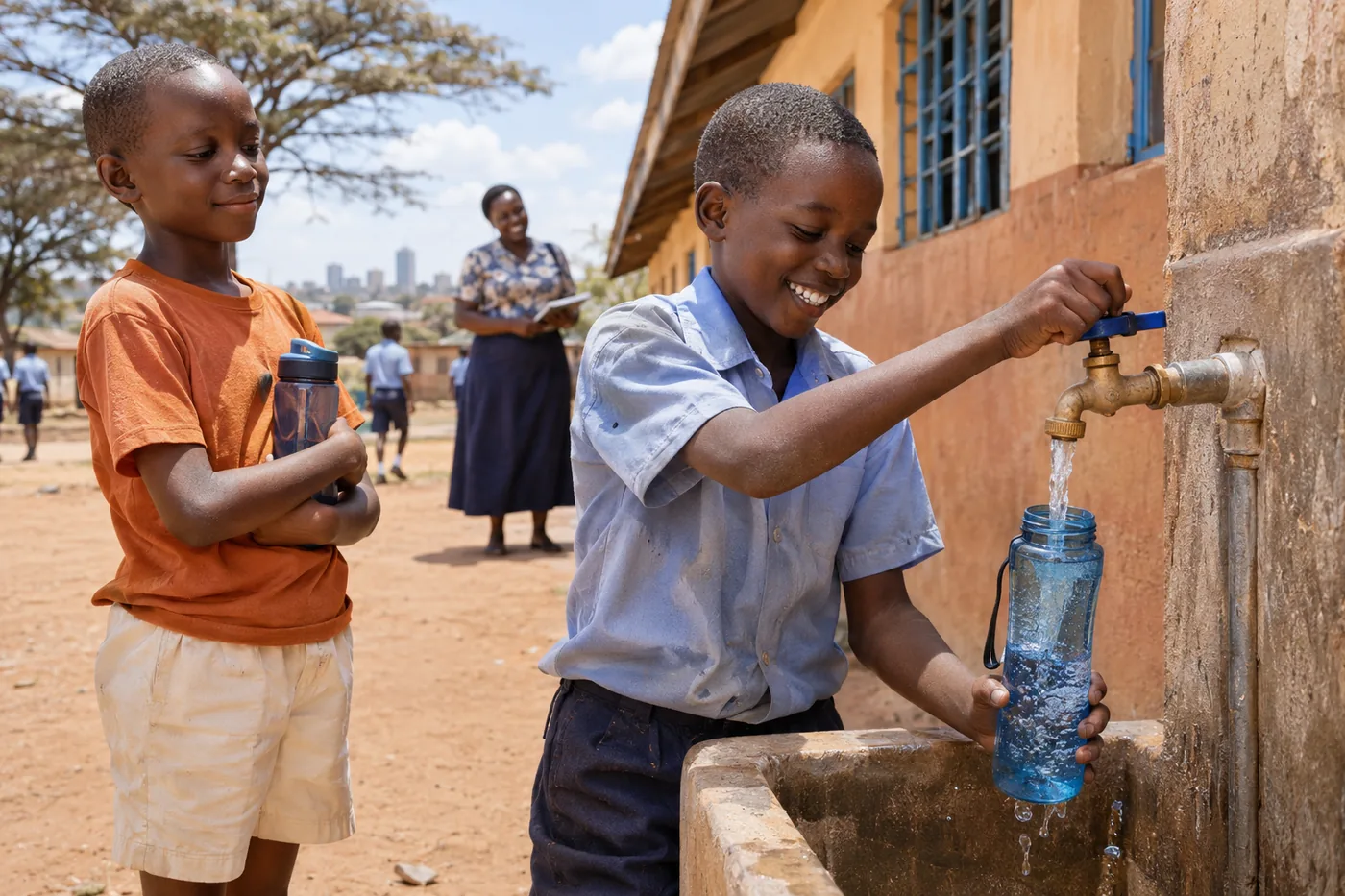
In this story preview, a child fills a bottle between lessons. It takes less than a minute. That simple moment depends on careful decisions about access, water quality and who will keep the point working.
When water is far from the classroom
If drinking water is unreliable, children and teachers have to plan around it. Time that could be spent learning may be used to fetch or manage water. Handwashing and food preparation become more difficult too.
The need is not only for a tap that looks finished. It is for dependable, safe water close to the places children use throughout the day.
A point people can keep using
The school, local technicians and community members need to agree where a water point belongs and how it will be maintained. Storage, drainage, access for younger children and repairs are part of the design.
Supporters should be able to ask whether it still works after installation. A picture from opening day is a start; a later check is stronger evidence.
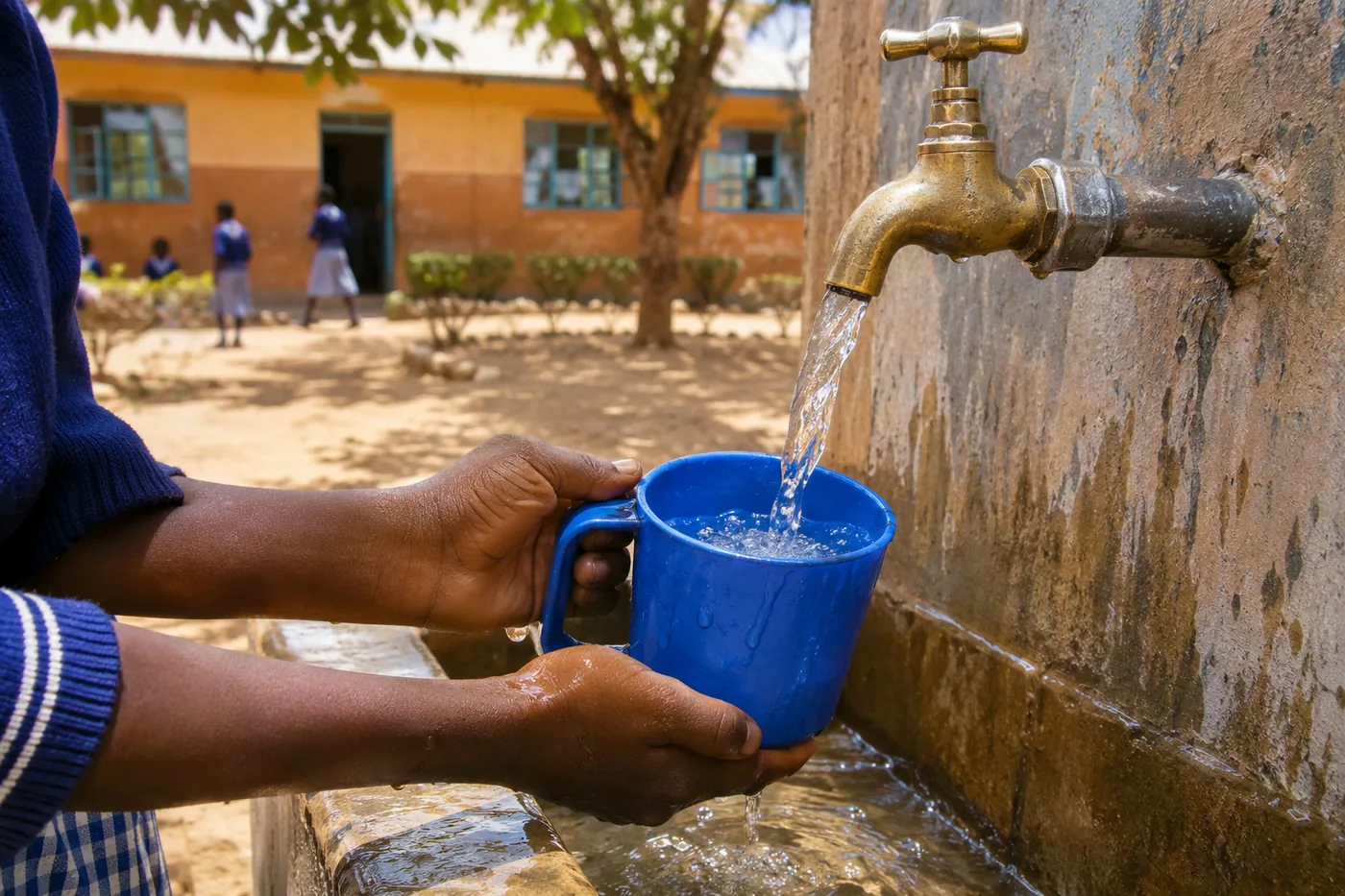
Back to being a child
Bottle filled, the child returns to friends and lessons. The water point fades into the background of the day, which is exactly where a dependable essential should be.
The wider school day still depends on meals, teaching and safe spaces. Water makes each of those easier to sustain.
The best water point is one children can simply rely on.
Explore clean water